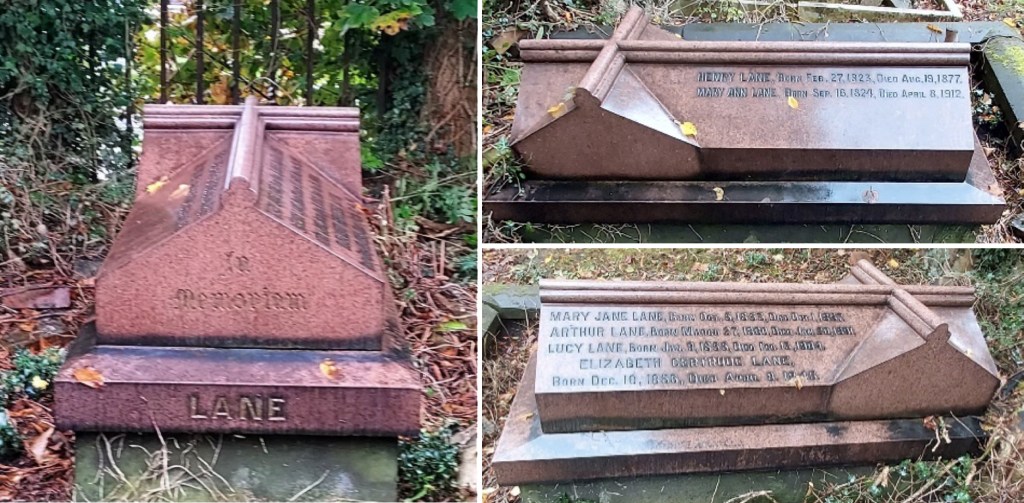
Grid Reference: F 16b
Henry Lane, Trap Maker
Personal Life
Henry Lane was baptised at St Thomas’s Church, Wednesfield on 9th March 1823. He was the ninth of ten children of Thomas and Margaret (neé Whick) Lane. Thomas was a japanner and he passed away when Henry was just 10 years old. Fortunately, Henry still had his mother who is listed on the 1841 census as a Schoolmistress living with one of her other children, Edwin John Lane. She died later that year.
In that same year, 1841, Henry can be found on the census as an 18-year-old apprentice living and working with James Baggott, trap maker of Church Street. By 1851, he was lodging with the family of James Hope, trap maker, in Graiseley Lane, but the following year he married Mary Anne Newell of Aston. Henry and Mary Anne had six children, the eldest of which sadly died aged four. They lived in Graiseley Lane. The 1861 and 1871 censuses show different house numbers—17 in 1861 and 12 in 1871—but it is difficult to know whether the buildings were renumbered at some point, or the family moved to a bigger house as both family and business expanded. Henry’s death certificate simply says Graiseley Lane—no number. He died of stomach cancer on 19th August 1877 and is buried in Wednesfield Cemetery.
Business – Supporting the Growth of Wednesfield

This frontispiece from a booklet about Lane’s and their products, published sometime shortly after 1926, shows that Henry had established his trap making business in 1844, which must have been shortly after he finished his apprenticeship with Mr Baggott.
The book also shows the line of management succession through the family up to point of the booklet’s publication:
1844—Henry Lane (founder)
1877—Arthur Lane (eldest son of the founder)
1891—Henry Lane (younger son of founder)
1919—Jointly, Henry Lane (younger son of founder) and his son Henry Chamberlain Lane.

In 1919, a totally new plant was installed and the factory – Eagle Works, in Hickman Street, Wednesfield – became the most up-to-date of its kind. The following year, two important business developments took place. Firstly, the firm became a limited company, and secondly, it opened a new branch in Australia called Henry Lane (Australia) Limited, managed by Arthur E Lane, the grandson of the founder. Arthur died in rather tragic circumstances in 1928, having been attached by a shark whilst bathing at Merewether Beach, Newcastle, Australia.
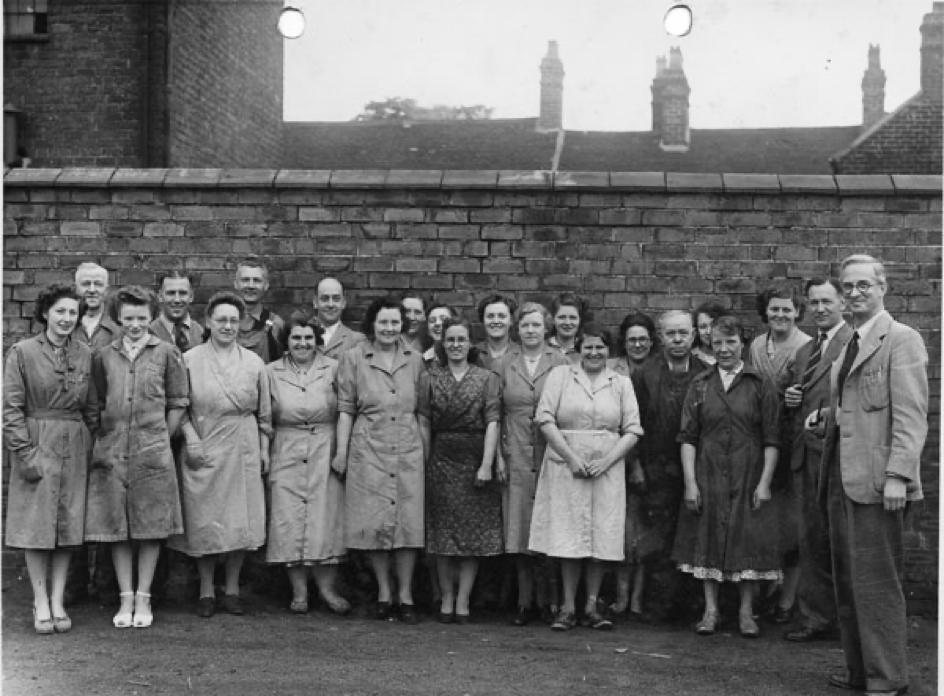
The photo above shows the staff at Lane’s in the 1940s. Lane’s effectively ended its trap making business in the mid-1950s, but Henry Lane (Australia) Limited is still going strong today.
After the rabbit plague in Australia had been brought under control in the early 1920s, the Australian company’s product range expanded to include household essentials such as can openers, carpet sweepers, spirit stoves and door locks. During WW2, it produced fighter aircraft parts and Owen machine guns. Today, the company is known for its security hardware and proudly boasts that:
Whether at the Opera House, during your commute or in your own home, Lane is a brand that Australia can count on for security, style and function.
… and all this because of a young Wednesfield apprentice who had vision and business acumen.

 Wednesfield Burial Ground Project