Grid reference: N14 C
James Bartholomew Pidgeon, Maltster and Farmer
Personal Life
James Bartholomew Pidgeon was born in Shifnal, son of Robert Pidgeon, a Gentleman and Substantial Landowner of areas of Shifnal. He followed his father’s profession of Maltster as stated in the 1841 census, but by the time of the 1851 census he was a farmer residing at New Cross Farm (now part of the site of New Cross Hospital).
In 1839, he married a widow some 15 years older than himself named Mary Evans (nee Bird), a Wednesfield lass born in 1785, the daughter of Richard Bird. It seems, from the announcement below, that occupancy of New Cross House came along with the marriage.


Supporting Wednesfield
In 1844, James became a Poor Law Guardian for Wednesfield being appointed in 1844. Poor Law Guardians were responsible for various things including overseeing the local workhouse, providing financial relief (either at home or via the workhouse), collecting the poor rate from those eligible to pay, school attendance and assessing the poor rate.
J B Pidgeon was a philanthropist, donating to many local causes. He gave an acre of land for the New Wednesfield Burial Ground in 1854, formerly part of Mill Piece:
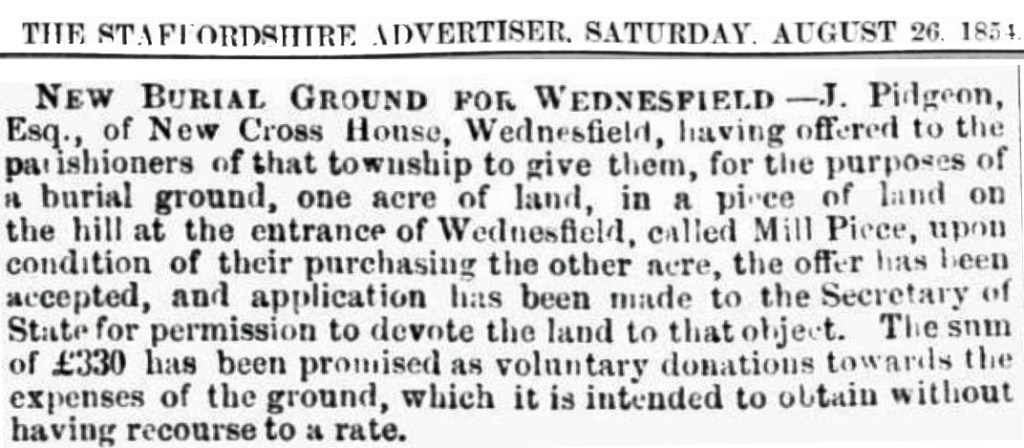
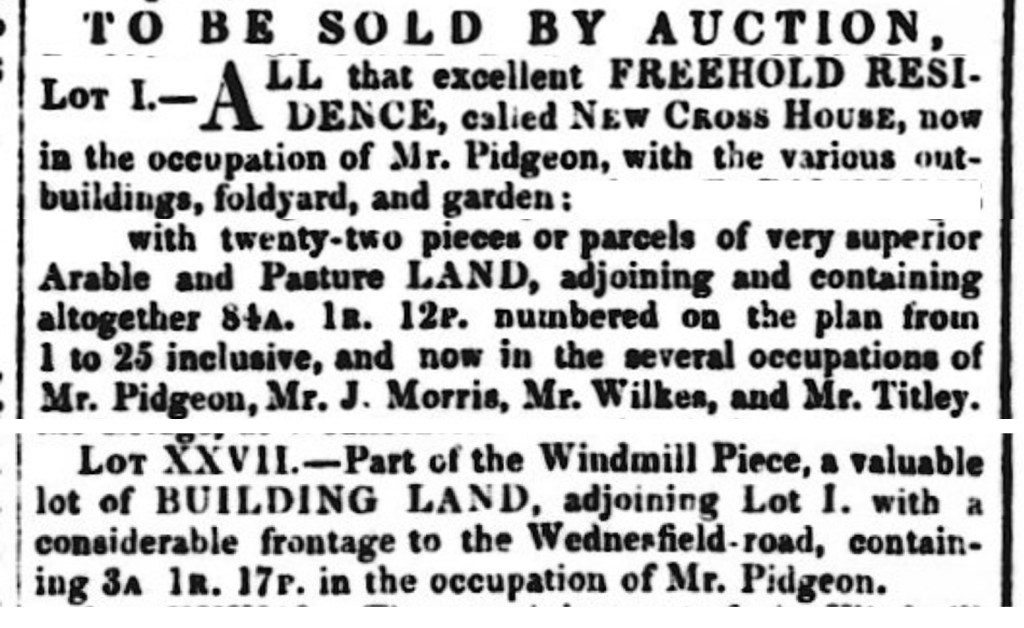
It is assumed that Mr Pidgeon purchased this land around 1846. He had originally been the occupier under the ownership of Richard Fryer, who died in 1844 passing the bulk of his estate to his son William Fleeming Fryer. The Wednesfield land/property in the New Cross area was put up for sale in 1846, citing Mr Pidgeon as the occupier of some of it, which he later offered for the new burial ground—part as a gift, part to be purchased, as per the newspaper article above.
He also donated to the building of the South Staffordshire Hospital (later known as The Royal Hospital), the rebuilding of St Thomas Church in the mid-19th-century, and not forgetting 2 shilling for the new church bell in 1853.
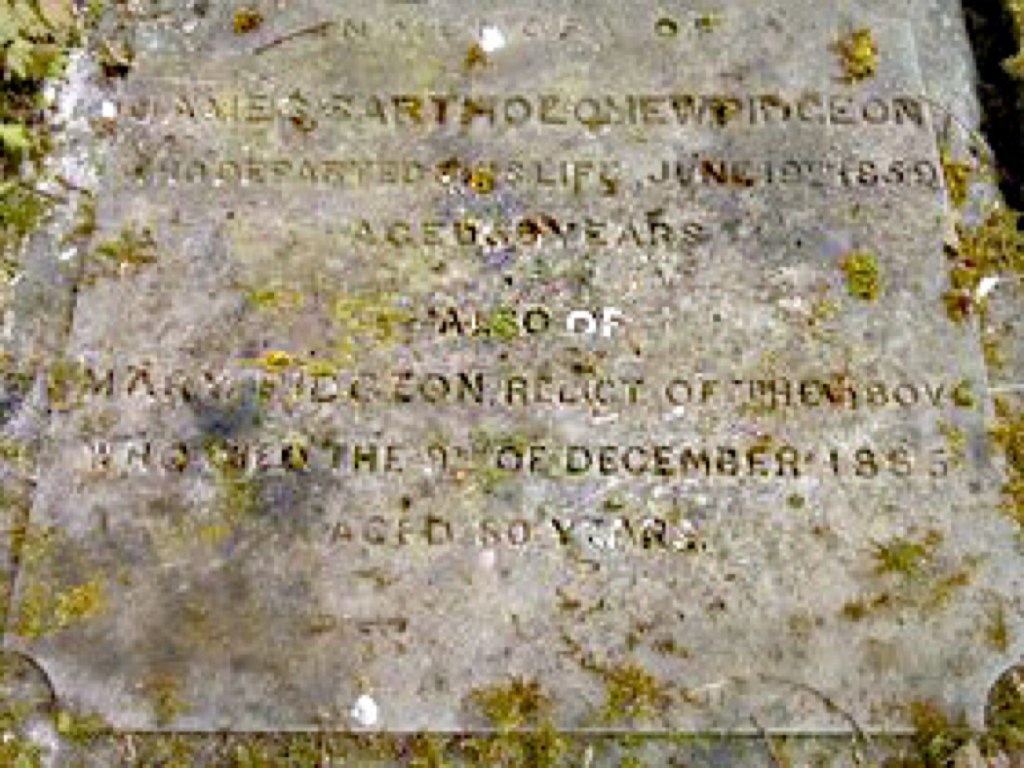
Five years after supplying the land for the new burial ground he would be laid to rest there, overlooking his former home of New Cross Farm. Originally there was a monument marking his grave but all that remains today is a stone.

 Wednesfield Burial Ground Project