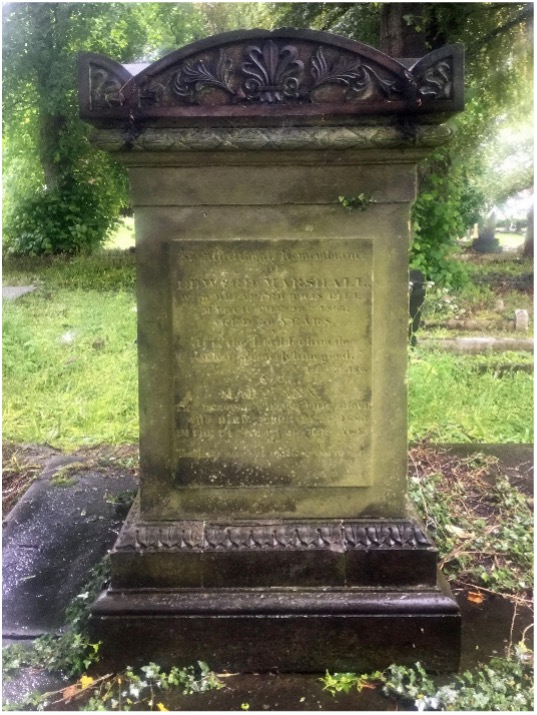
Grid Reference: L 15C
The Marshall Vault is topped with a 4-sided monument, recording other family members interred there.
George Marshall (1783 – 1859)
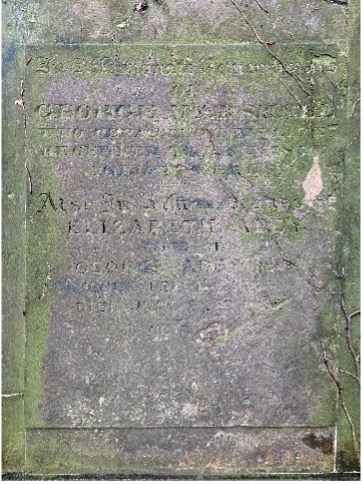
George Marshall was the first to be interred in the vault in 1859, having lived a long life of 77 years – although his death certificate says 78 years. He is probably the same George who started his married life as a farmer and trap maker, occupying several acres of land in March End. The 1841 and 1851 censuses confirm him as living in March End, with the occupation of trap maker, having several apprentices in his household.
George was born in Penkridge, the son of Richard Marshall. At some point the family moved to the Wednesfield area, and in 1804, George married Jane Nicholls at St Peter’s in Wolverhampton (St Thomas’s in Wednesfield was not licensed for marriages at this time). George and Jane had nine children – three girls and six boys – with George growing his trap-making business through the years. Jane died in 1834 and George remarried to Mary Humphreys the following year, dying himself in 1859.
Of George’s six sons, Edward, Luke and Enoch all became trap makers in Wednesfield.
Edward Marshall (1804 – 1863)
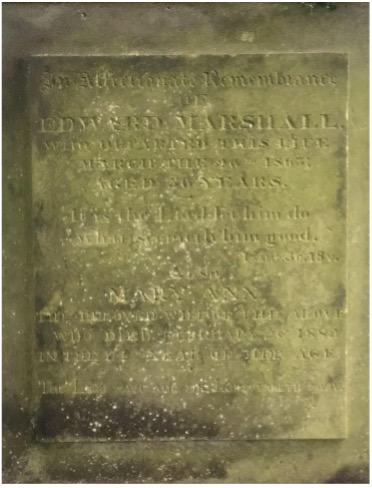
Edward Marshall was born in 1804 in Wednesfield, the eldest child of George and Jane. In 1836 he married Mary Corkindale in Birmingham. The parish entry of their marriage shows them both signing their full signatures in immaculate handwriting. They settled in Portobello, Willenhall, where Edward prospered as a Trap Maker. Edward and Mary do not appear to have had any children.
By 1855 Edward had purchased a piece of freehold land in New Street, Wednesfield, with the expressed purpose of building on it, and indeed, the 1861 census records Edward and Mary a living at number 13 New Street, Wednesfield.
Mary had purchased a large burial plot for the family in the newly opened Wednesfield Burial Ground, before the ground was actually consecrated. However, the legislation covering Churchyards was completely different to that which covered Cemeteries. The Church of England did not consider that burial in consecrated ground was necessary to the ultimate destiny of the soul, but consecrating space was a way of ‘dedicating’ that space to God, and placing that ground under Church ownership and control.
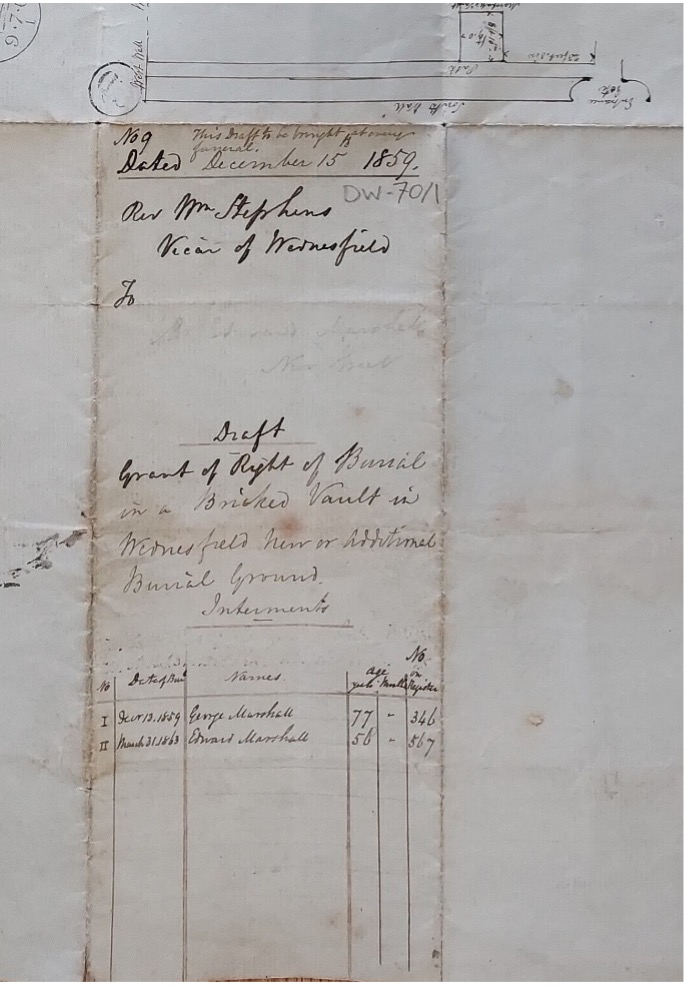
A copy of the Marshall burial plot deed, part of which is reproduced on the left, survives at Wolverhampton Archives.
Hand written by Reverand Stevens, the deed demonstrates the control the Church retained over the disposal of burial plots.
The plot provided for a bricked vault capable of holding up to nine family members.
Edward died in 1863 at age 56 and was the second family member to be interred in the Marshall vault. The rather unusual cause of death recorded on his death certificate reads:
“Shock to the Constitution from compound dislocation of the wrist with fracture”
Edward had made a detailed Will, and whilst he and Mary had no children of their own, Edward had provided well for his wife, her family and his own siblings, leaving his freehold property in New Street to his brother Luke, a master trap maker, and numerous other bequests showing that his life as a trap maker had been financially beneficial.


